Crossing the Labrador Sea to Greenland
Off at Dawn
At dawn, Karma and Esel slipped out through the Labrador channels and pointed themselves northeast along the rhumb line toward Qaqortoq, Greenland—a destination which, on a chart, appears comfortingly nearby until you notice that the chart is folded in half and Greenland occupies most of the other side.
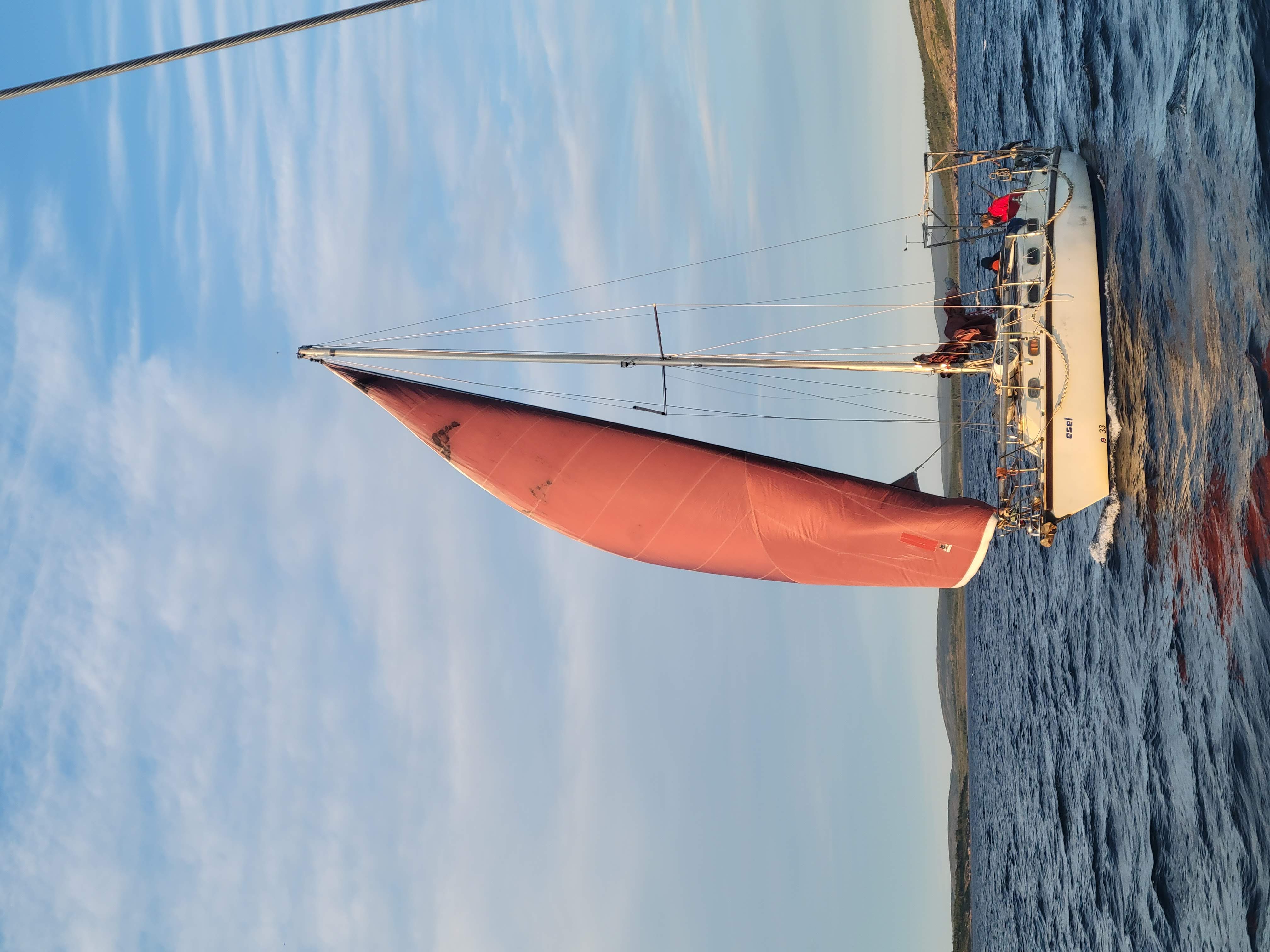 We left at precisely the same time, which immediately transformed a friendly departure into a minor naval arms race. For the first few hours we sailed side by side in the rising sun, each boat making subtle and entirely innocent adjustments to sail trim in an effort to establish who was, in fact, the better sailor. No one said this aloud, naturally. That would have been unsporting. Instead, we merely stared at each other’s boats with the concentrated politeness of people trying to overtake in a supermarket aisle.
Esel looked particularly magnificent: tan-bark sails glowing against the black, low, rocky Labrador coast, like a handsome vessel from another century that had taken a wrong turn and found itself in the company of two people with AIS, a Garmin device, and a strong preference for instant coffee.
Then, as is customary whenever one has got the sails just right and begun to feel quietly pleased with oneself, the wind disappeared.
The swell, however, did not disappear. It remained extremely committed to its work, rolling in from several directions at once and making the sails crash and slat with the enthusiasm of a cupboard full of baking trays falling down a staircase. We motored for a while, which put us ahead of Esel, though they remained on the horizon behind us. And there they stayed—small but distinctly there—for another day and a half.
It was an oddly comforting thing. We were well offshore, heading toward a place with glaciers, icebergs, and a population density broadly comparable to that of a medium-sized herb garden, yet our friends were only a few miles away, visible on the horizon and reachable by radio. There is something deeply reassuring about knowing that, should anything go wrong, another boatload of sensible people are there to say, “Well, that doesn’t sound ideal.”
The forecast suggested an agreeable passage: mostly 15 knots from the southeast, with one overnight period of 25 to 30 knots from behind. This sounded almost suspiciously civilized. A bit of wind, a bit of following sea, a few days toward Greenland. Nothing dramatic.
The Labrador Sea had other ideas.
The forecast wind was, technically, correct, in the same way that saying a moose is “rather large” is technically correct. It failed to capture the larger truth: the swell seemed to have no clear purpose, direction, or governing authority. It came from wherever it liked, at whatever interval it found amusing, and frequently seemed to arrive with personal grievances.
As we neared Greenland, we expected—and privately hoped—that the wind would ease as we approached the ice. It seemed only fair. If one is required to keep watch for icebergs, fog, growlers, bergy bits, and every other form of frozen object designed to ruin an otherwise pleasant afternoon, the sea might at least agree to stop trying to shake the boat to pieces.
Passage Rhythm
Once the wind filled in and we had a night at sea behind us, we settled into the rhythm of the passage.
There is a point on any longer sail when normal life quietly recedes. Meals become things assembled one-handed. Time is measured in watches, wind shifts, and cups of tea. You cease to ask what day it is because the answer has no useful bearing on anything. The important question is whether the horizon looks normal.
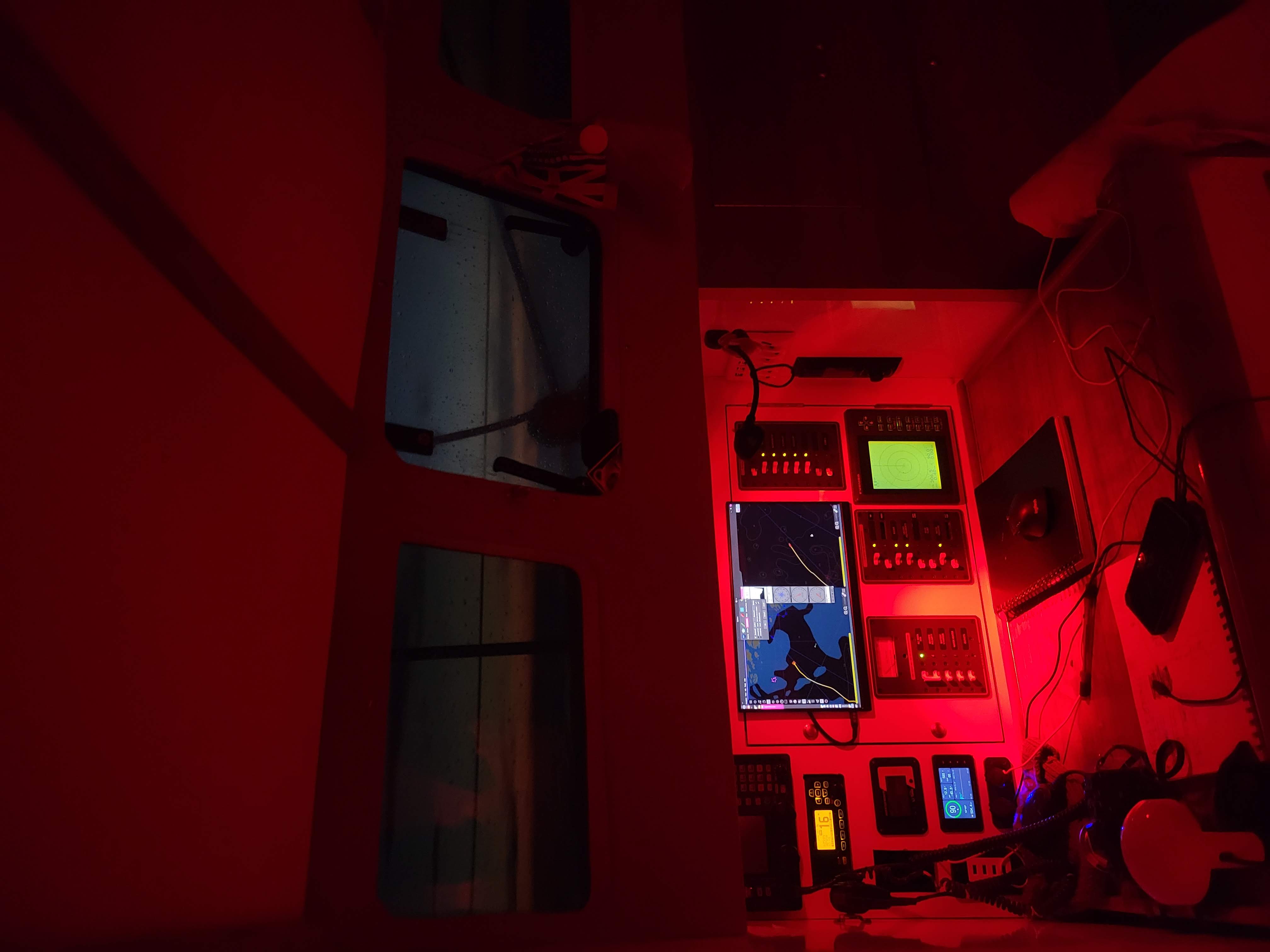 Most importantly, we had not seen ice.
Ben, Heather’s brother-in-law and our designated ice expert, was standing by in Seattle to examine ice charts and relay the relevant bits to us through the InReach. This was an arrangement of remarkable modernity: a small boat halfway across the Labrador Sea receiving iceberg intelligence from a man several thousand miles away, in a city that was probably having perfectly ordinary weather and no waves whatsoever.
The early report was encouraging. We appeared to be clear of ice for a few more days.
This was excellent news, though “clear for a few more days” has a certain quality to it when you are heading toward Greenland. It is rather like being told that the tiger is not currently in the house, but may be expected shortly.
As we pushed north, Esel gradually disappeared from view. Our AIS range was not especially heroic, and before long we were out of both radio and AIS range. Still, we knew they were somewhere about 20 miles astern, making their own way across the same large, restless, and increasingly chilly piece of ocean.
The nights grew shorter. Not dramatically at first, but enough to make you notice. Darkness became more of a suggestion than a firm commitment. There was still perhaps an hour or so when it was properly dark, but even then the sky never quite seemed to give itself over to night. It merely dimmed, as if it had forgotten to turn off the lights.
Windy Night
The windiest night turned out not to be the night forecast to be windy, which was typical. Weather forecasts, particularly at sea, do not so much predict events as provide a selection of possible themes for the evening.
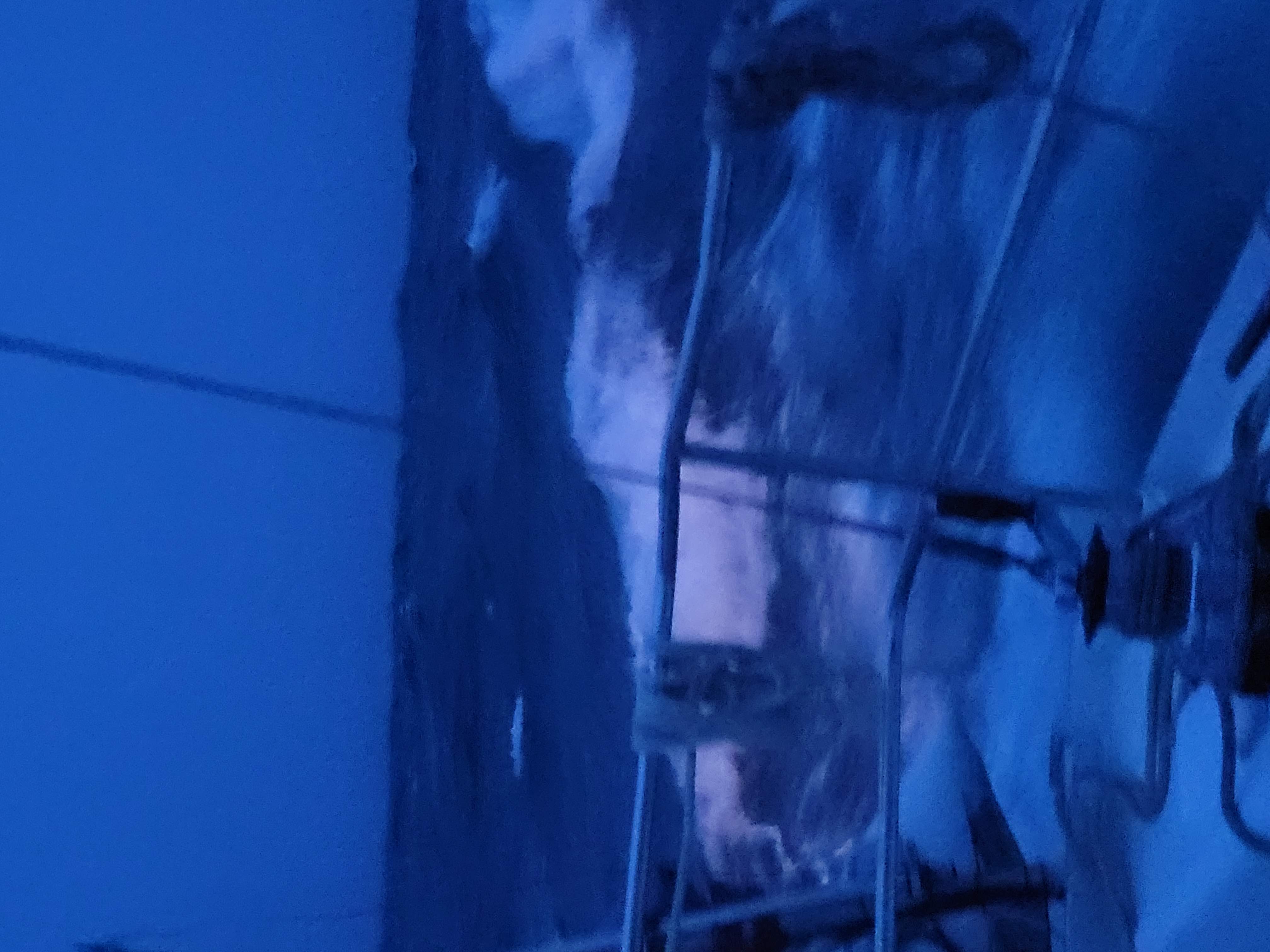 The unexpected blow arrived on a particularly dark night, made darker by low cloud and drizzle. The wind freshened, then freshened some more, and before long the sea was in a mood. White water appeared everywhere. Waves slapped, hissed, and burst around us with the lively determination of a crowd of people trying to get into a shop during a sale.
Karma was set up for running: whisker pole to starboard, boom prevented out to port. With the wind’s slight shift, we were on starboard tack on a deep reach—about as good an angle as one can hope for when the wind decides it has places to be. The boat charged along beautifully, which is always reassuring until one remembers that “charging along beautifully” is often sailor language for “going extremely fast in conditions that make all decisions feel permanent.”
Every ten minutes or so, I stuck my head out beneath the dodger.
I could barely see the bow.
Looking astern was no better. There was nothing there at all—just blackness—until a wave rose above the stern arch and appeared briefly in the glow of the stern light. It would materialize out of the dark, white and enormous and apparently offended by our existence, before vanishing again into the sea.
Not all the waves broke into the cockpit, which was considerate of them. But they were breaking nearby, and Karma was surging forward at a respectable clip. Ten knots, sometimes thereabouts. Everything was prevented, poled out, and effectively committed to continuing in the direction we were going. Turning quickly was not part of the evening’s programme.
At some point I had the thought that sailors occasionally have when conditions are lively but still technically manageable:
Hang on. We are flying along at ten knots, in complete darkness, unable to see more than a few yards in any direction, with the sails locked into a downwind configuration, in waters where there may conceivably be icebergs.
This was not a thought that improved the night.
So I messaged Ben. There was nothing he could say that would allow us to dodge anything more effectively, but it seemed worthwhile to establish whether we were presently racing through a known iceberg district at motorway speed.
His reply came back: according to the ice information, we were still quite a long way from the main iceberg zone.
“Phew.”
At least now I had an official reason not to spend the rest of the night imagining the bow of Karma meeting a large, silent piece of Greenland at ten knots.
Approaching The Coast
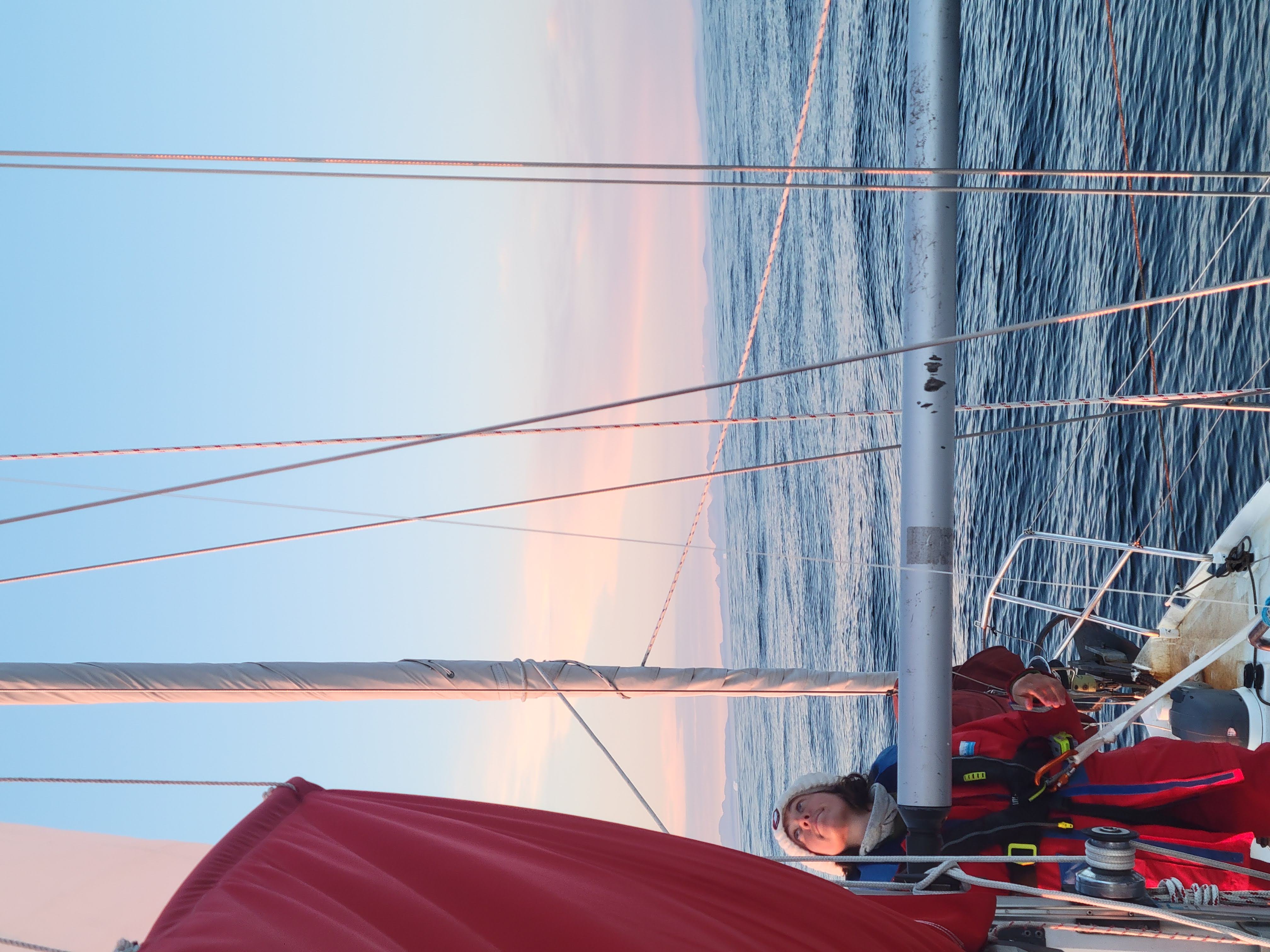 This is really the part that we were planning for back before leaving. The icebergs aren't too thick until pretty close to Greenland and so really what we didn't want was to sail 6 days and arrive on a day where it was rippin' wind kicking up a huge sea where we wouldn't be able to steer or more importantly see the smaller ice bits in the water that break off of the large bergs.
We couldn't have timed it better. It was looking like we'd arrive in the morning and as evening fell so did the wind which also took the swell with it as we left. We had a flat as a lake motor overnight, well I say overnight, but it was more like twilight at this point this far north, with lovely clouds and soft reflections of what looks like early morning light over the flat calm water. Off in the distance we began spotting bergs.
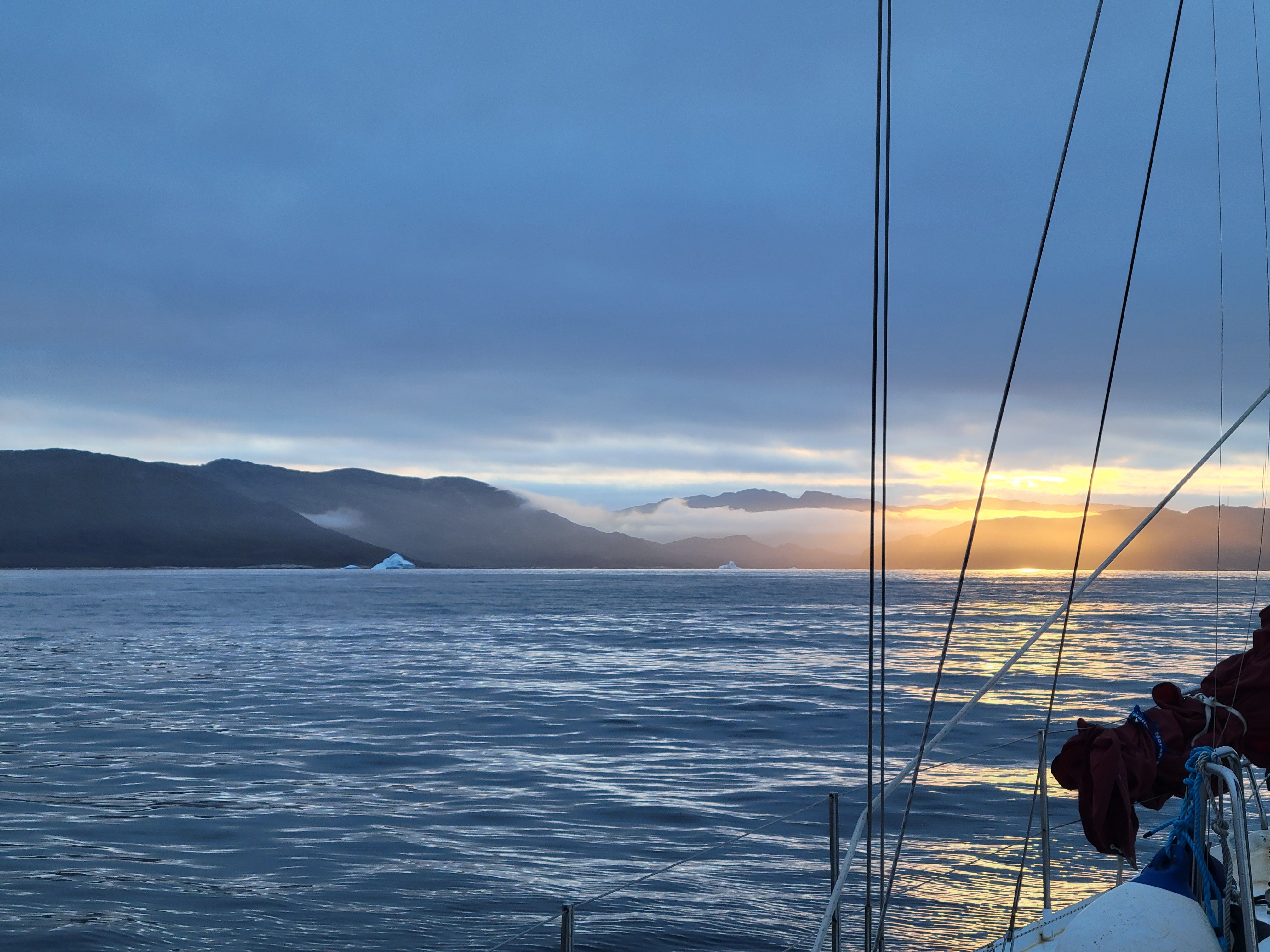 At first we were getting worred that our new to us used radar wasn't going to pick them up as this large looking one wasn't showing up even with the gain high and the range at 16 miles but we then realized that it was probably significantly larger and significantly further away than we were originally thinking. We then started to see more as the outline of the massive mountain range at the south of Greenland came into view.
Qaqortoq
As the sun began to show over the horizon we were entering the channel into Qaqortoq, it was all very exciting. Qaqortoq isn't too far in the fjord so pretty quickly we could see where we were going. Entering a place known for having inaccurate, bad, and not detailed charts is a little unnerving but the channel was larger than we were expecting the depths were lining up with what we were expecting.
A bit of faffing about around getting the boat docked up somewhere, Greelandic harbours aren't really built for yachts, and off onto land we stepped.
Back in Greenland! And on our own time this time around! Also a side note, on our own boat our first stop (hopefully of many) outside of North America!