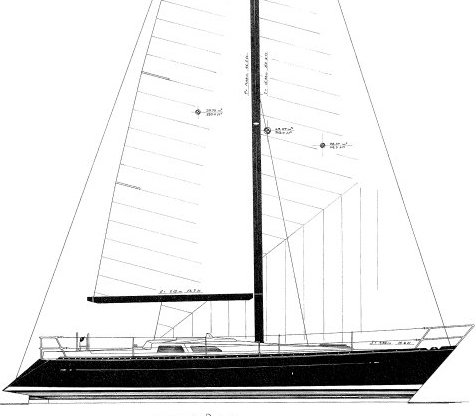
The Gulf of Maine is the body of water south of the Bay of Fundy, sandwiched between Nova Scotia and Cape Cod in MA. If you don’t know of the Fundy, you should know that the tides are quite large. This can create exciting waves near the entrance and the tip of the Scotia; if the wind is opposing the current, all the more exciting. The game to play regarding passage planning for western Atlantic this time of year is one of threading the needle between hurricane season & winter storms. The likelihood of hurricanes directly hitting the Scotia is always low but obviously once the Atlantic season as whole “ends” come November it’s even less. BUT the chance of a gnarly winter storm increases of course as winter progresses. Being out of season seems to be our modus operandum so this game is a welcome one.
Note: we have taken to calling Nova Scotia ~The Scoshe ~ by no ones preference but our own and I urge this pronunciation throughout the reading.
We worked our way down the coast of the Scotia in a welcomed lack of fog between highly variable forecasts, conceding a few day hops to motor boat trips just to make southern headway er footway. Our 6 months tourist period to be in Canada was coming to a close within a week and we were staged in Shelburne to cross the Gulf to the States. Willing to overstay if we needed due to weather (there is no check out process in Canada), we decided we would still attempt to be out by the required time; the need to start a job sooner than later also pressed us south. This town was lovely but here, some of the colorful autumn trees we had been enjoying since Cape Breton had shed their leaves. Most of the boats we met in the Scotia had already crossed on weather windows which barely ticked the boxes for a decent crossing. We knew weather windows were obviously dwindling in quality and quantity as winter rolls in.
Day 2 in Shelburne rolled around and we took to the road to dock walk at the boatyard about an hours walk down the arm. Almost there, we decided to check the forecast just in case… It was Tuesday about noon. The forecast was fantastic for a crossing if we left immediately and made a 6 knot average to beat out ridiculous weather coming Thursday night. If we were caught out then, it would be a très mauvais time if not très dangerous. The next few weeks looked bunk with looooow nighttime temperatures and no wood or diesel stoves available on FB marketplace. We hustled to the yard to find our fellow boat friends from a steel, home built boat named Deneb II who entertained our French attempts and gave us a ride back.
Preparation wise, the boat was good to go with a quick oil check per usual. Since Halifax, the autopilot was freshly operational and welcomed for the upcoming overnights. I bummed a ride to get some flares and a signal horn from Vern & Dion’s fishing store where I was asked repeatedly, you are sailing through now? And even more shock when I told them, well in about 30 minutes or so. “There is a storm out there!” Yes but it’s in the perfect direction for now! We had a good chat about the local weather trends and they kindly gave me the contact of some local sailors.
Liam had the boat buttoned up and around 2 pm we had some leftovers before departing on our first overnight passage. The inevitable nerves surfaced. For Liam, it was the general “This is the right choice right?” and for me the only slightly negative nerve feeling was a desire to be on the road already since the weather on Thursday night was a frightening. The unknowns being our average speed, mileage expected relative to the rhumb line & wind directly at our back, the forecast moving up, all mitigated greatly if we leave as soon as possible.
So we left! A brisk motor sail out to start our 6 knot average goal and a decision to stick to our usual watch schedule: 6pm-midnight one person, midnight to 6am the other, then 3 hours off and on throughout the day. I took the first long watch without much difficulty. Liam didn’t sleep well which was a theme on the passage but I slept rather well. He was unfortunately off watch when the wind later decreased, forcing us to head to wind a bit (ie waves moreso on our beam) just to keep the sails from flogging as the wave action was more pronounced.
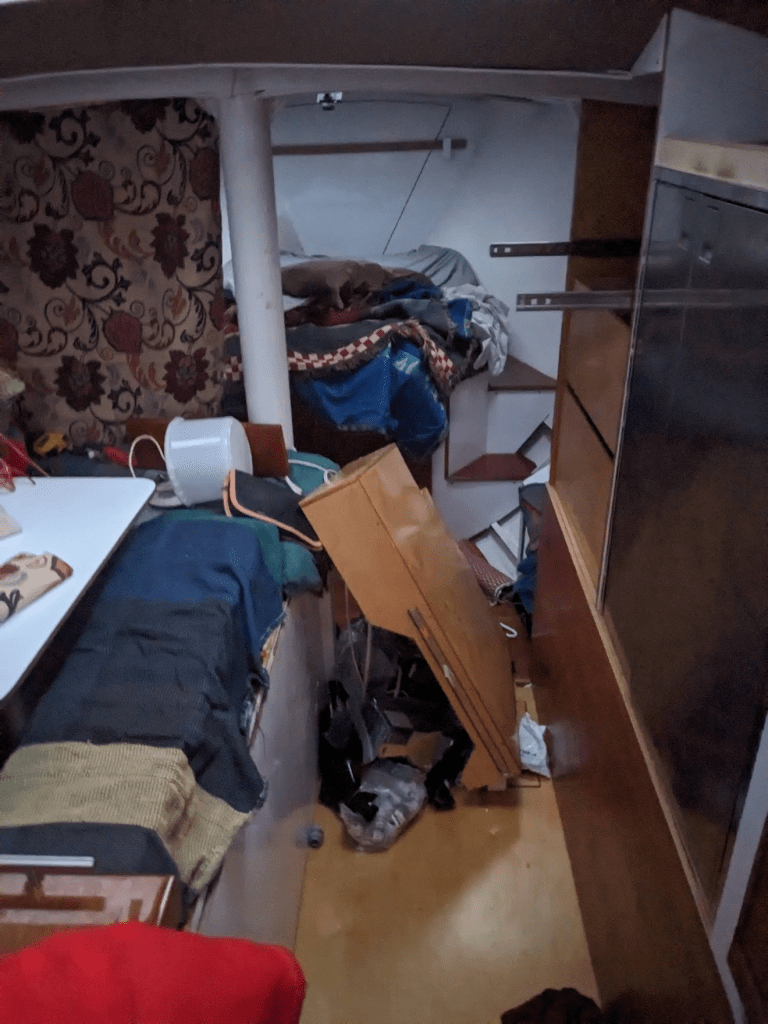
A series of nice things happened which people really should and do plan for the passage but we had not known we were going but 2 hours prior. Lucky us, we ended up hitting marks that we would have planned for.
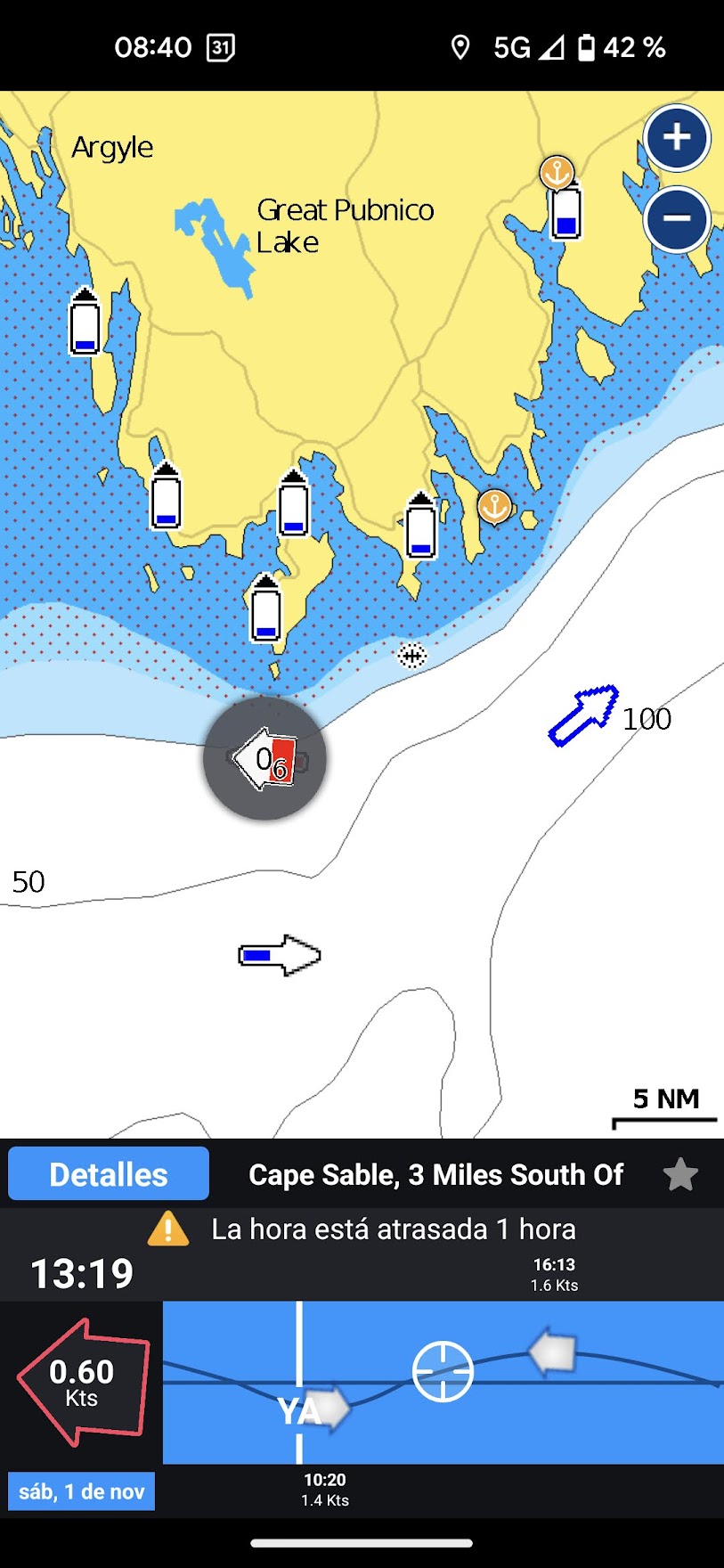
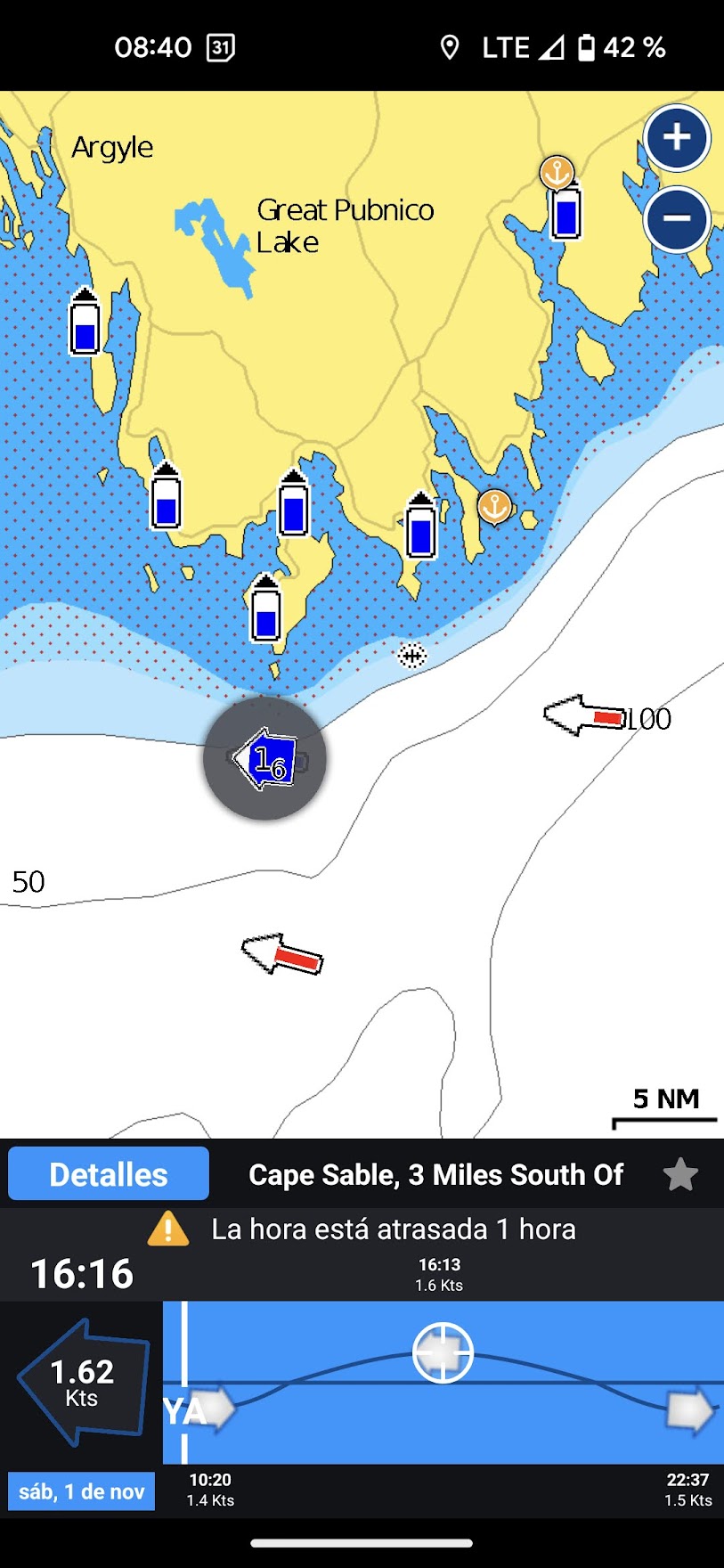
1 Currents at the southern tip of the Scotia
The massive 12 meter tides in and out of the Big Fund create not negligible currents. Our tables had them around 1.6 knots at peak. The waves are the issue created here; if the current opposes the wind, the seas can grow gnarly messy seas. You can be smart and time two currents as you start your western heading, our Gaspé informed us in French. They also admitted that although they plan, they never seem to hit it. Turns out our timing was impeccable. We fought a bit of current heading south to benefit from both stronger currents as we turned to head WSW.
2 Wind
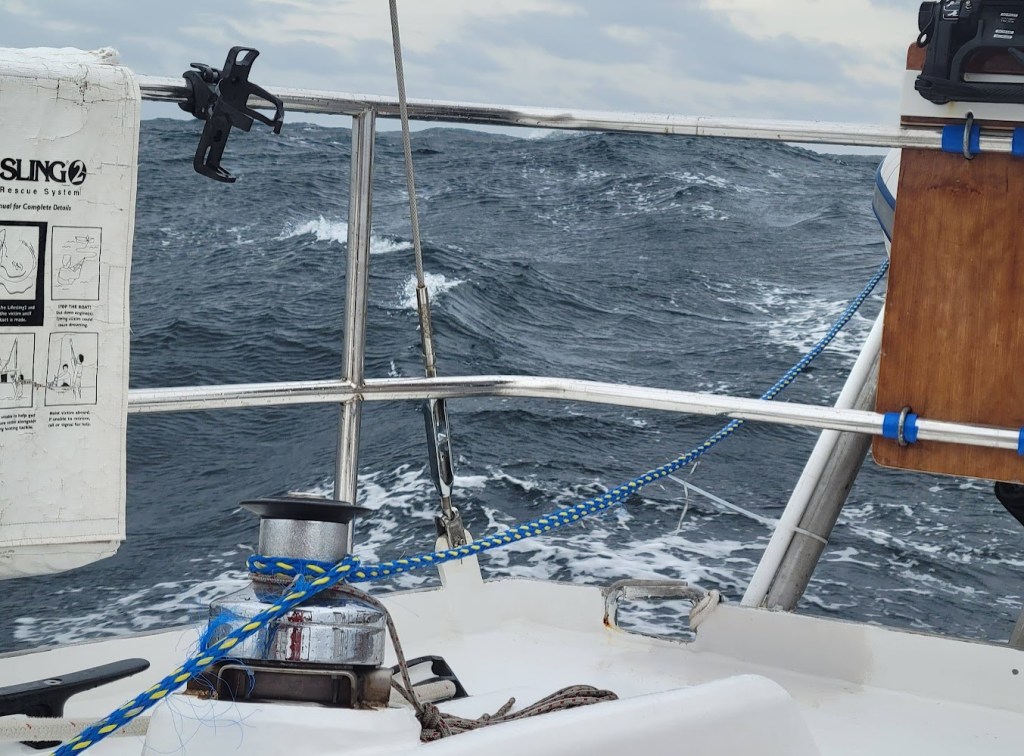
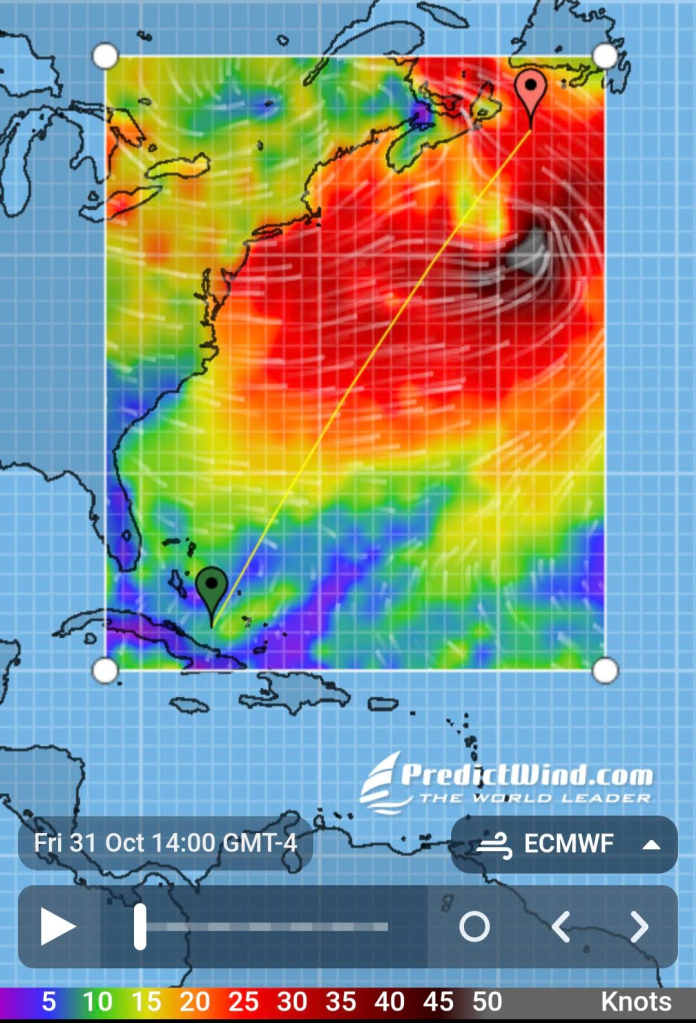
I mean it was perfect – the wind was forecast straight from point a to point b and ended up being a bit more northerly than that so once we rounded the corner of the Scotia, we didn’t have to gybe back and forth anymore. I wish I had a screenshot of the forecasts but draw a line from the Scotia to Cape Cod and draw an arrow head with 25 knots scribbled next to it for the next day and a half and that will suffice to visualize it minus the colors our apps bless us with. We had 2 reefs in the main the entire trip and the equivalent of 1 in the headsail. We were flying with great controllable speeds with the autopilot handling the surging/surfing super well. One negative was the wind died down a bit (as forecast) little over half way through but we still made decent speed as we made long gybes.
3 Current at Cape Cod
A decent anchorage in Provincetown was our plan B if we didn’t make it in time for the Canal transit. Fortunately, timing was decent to go further to Onset Bay, plan A. As we approached, our unpredicted timing saw the current changing at the point and it pulled us into the Bay. This gave us a boost to the entrance of the Canal. We could anchor, unprotected, and wait for the Canal current to change if it was not ideal until slack. Now the wind started shifting, as forecast to be easterly/on our beam as we headed straight south to the canal at great speeds avoiding fishing traps.
4 Current at the Canal
I reefed the headsail further. Eta to the Canal entrance was about 14h30, ie 2 1/2 hours before the current was null. If you ride the current through, you will benefit from about 3 knots on your side at peak. We got there when there was about 1.5 against us. After a brief chat with the kind Canal traffic control, there was no hesitation to proceed except a funky entrance which we can confirm. We struck the sails and motored against uncomfortable waves ~ 5 foot high at the entrance of the canal. The wind was reported 18-22 but we had no issues maneauvoring and proceed past them moving above 3 knots. Part way through our peaceful 4.5 knot, waveless transit, the current shifted and we were motoring with the headsail up (strong wind aft was still filling it the entire transit) over 5 knots by the end.

5 Current at the entrance to Onset Bay
Our friends on Type Eau, a lovely Boreal 47, had just departed but told us about this great spot to hunker down for the wild winds coming. The winds had already started and we were keen to anchor. The entrance was around a somewhat tight corner and multiple people warned to avoid it in high current. Lucky for us, we hit right about slack.
6 The frightening Thursday night onward winds
The anchorage was large enough for all and we joined 3 other sailboats. The rain started obstructing my glasses just as I was dropping the hook with Liam on the helm. Not half an hour after we were anchored, around 630 pm, seriously strong wind started building. We were so thankful to be already set. Forecast in our little protected zone has 35 knot gusts consistent for over 24 hours up to > 40 knot gusts. It has been damn breezy the last 30 hours on the hook.
7 Our new beloved anchor Rocky (interim name)
We had 2 CQRs, 45 lbs each, by default left on the boat, one of which we used and despised hesitantly as it held us kind of most of the time. In Lunenberg we dragged quite dangerously but got out of the situation. We already had a purchase arranged the next day for a 55lb rocna and installed it underway the next. With all but absolute certainly, that old anchor would not have held us through the night. After watching 2 other boats drag around the anchorage and fight to get hooked again in the 35 knot winds and waves near a foot high from the sizeable fetch, we let out even more chain just to be sure and ended up with just under 10: 1 scope. We were holding before that easily with 6 to 1 but we both slept great through the night.
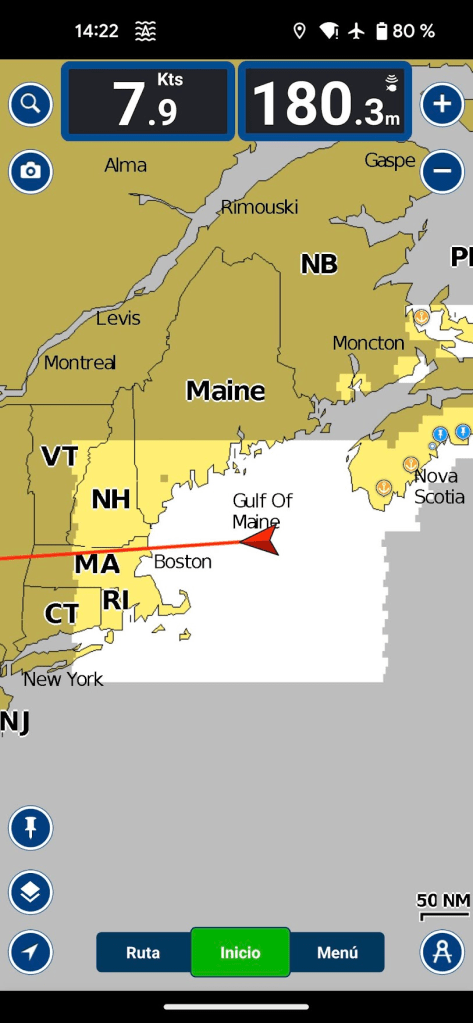
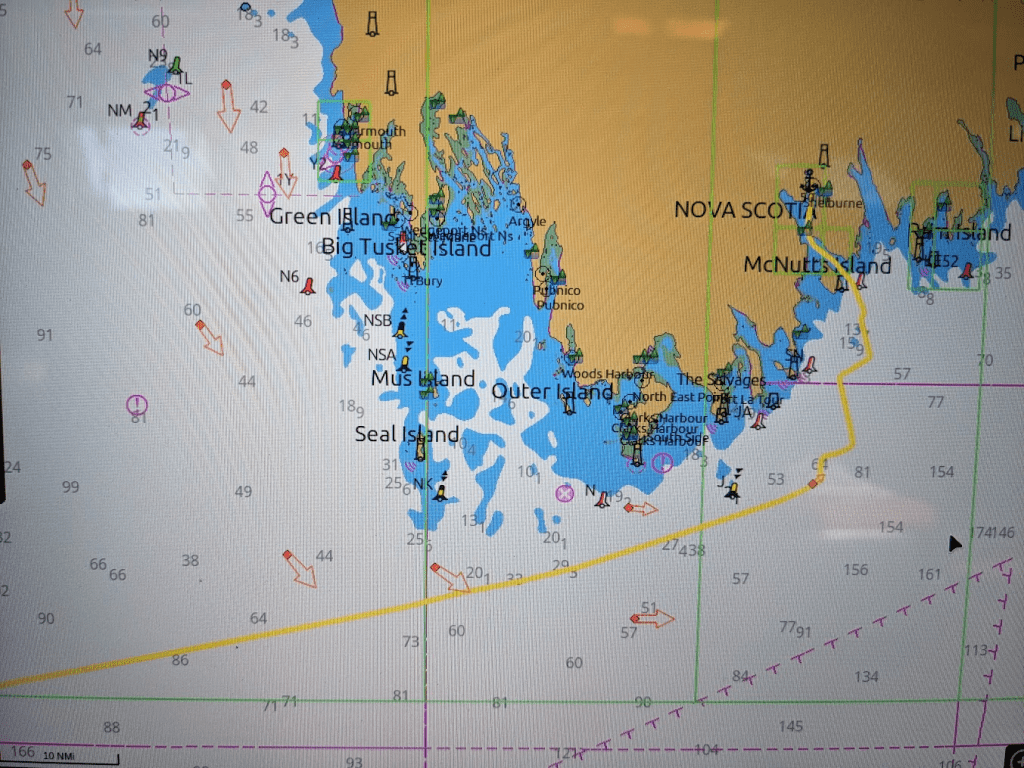
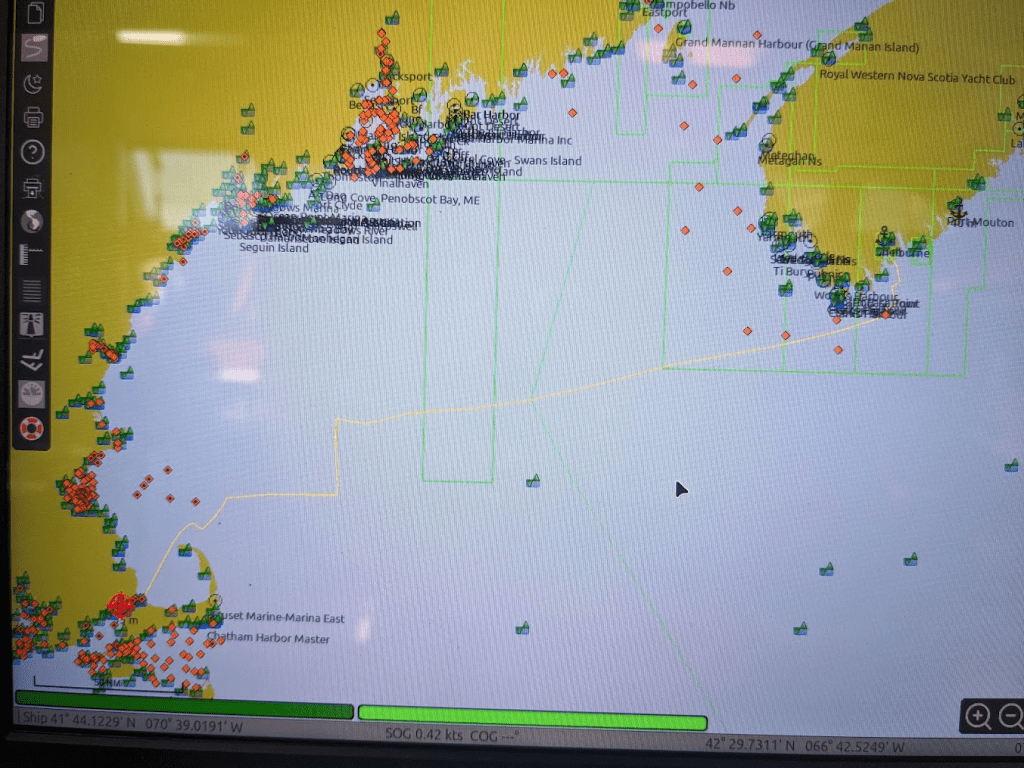
Here is our track. You can see our gybe where we head straight south half way through the trip. Our speed dropped the around 5 knots until Cape Cod because the wind died considerably but left big waves. With the wind 45 off our stern we wouldn’t flog the sails (we are shy of the pole but we do prevent the main….need to practice). Then Thursday the wind shifted easterly as forecast; this benefit the second next gybe which is the diagonal SW/NE line above the Cape Cod hook which put us on a good line to Cape Cod Bay.
Waves were easily 10 feet and very cool to watch off the stern. Liam enjoyed them even more after he did a few voms over the side at some point Wednesday :^)
The trip deets! 318 nautical miles in 52 hours. We motored for 1.2 hours total. 6.1 knot average.
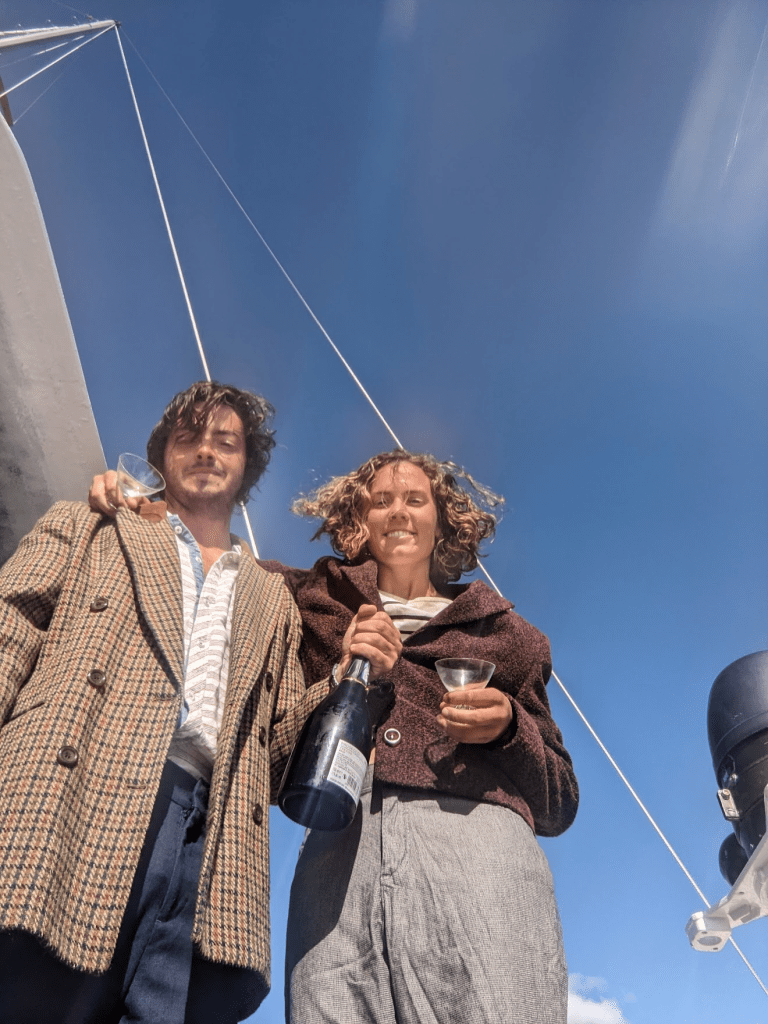
The next day, Friday, we filled out our check in info on CBP Roam, half expecting issue since our boat is not officially registered yet…something about a government shut down perhaps affecting it…but none was had. Easy, no boarding or video call. Winds are still blowing like stink but yesterday we put on our glams and had champagne in the cockpit when the sun came out. Just in time to invite our neighbor who dragged over to join us and pass the hunker down times. The first owner of his boat, a Shannon 38, was Morgan Freeman turns out! He is waiting on southbound weather windows to Florida but, as is the case with other sailors we have met, Hurricane Melissa killed or is killing plans. That one is part of the reason the winds are strong now but I’m sure there are other systems in play that are contributing as well. A large chunk of the North Atlantic looks uninviting right now, to say the least.
Next stop will be a relatively short one to Newport where we will try to land jobs for the winter and a decent place to live on the hook. And source a heater! The wool blankets we picked up in Halifax are rocking in the meantime.


 Sailing Vessel Karma
Leave a reply to LR4Serendipity Cancel reply