Using one’s own ground tackle
for extended periods of times is sort of what separates the weekend warrior boats from the cruising boats. If you’re only out for a bit every once in a while the mooring buoy makes a whole lot of sense. No depths to worry about, definitely isn’t going to drag around if the wind changes. Rocky bottom? No problem, they’re drilled into the floor. Many boats? No worries, someone planned their spacing perfectly.
If you’re going to a town, the dock, oh the dock, is obviously the most convenient choice. Yes, it’s everyone’s biggest fear, driving their large semi uncontrollable 10+ tonne yacht amongst seemingly always more expensive ones in tight waterways looking for the slip. But once you’re there, phew it’s the high life. No having to launch the dink, you’re as close as possible to amenities. Marinas come with fun perks, water, power, trash, showers, and neighbors.
All that sounds lovely I’m sure, the mooring you just slide on up to, tie some line to, and you’re set. The dock, you radio usually on VHF 66a, give some details, pay some huge fee, tie up, and you’re set. Why then do yachts have $1000s and 100slbs up front to do a seemingly redundant ‘parking job’ available through other means? Freedom. Your ability to go where when and how you want is greatly dictated by your ground tackle and your ability to use it as well as your confidence in it.
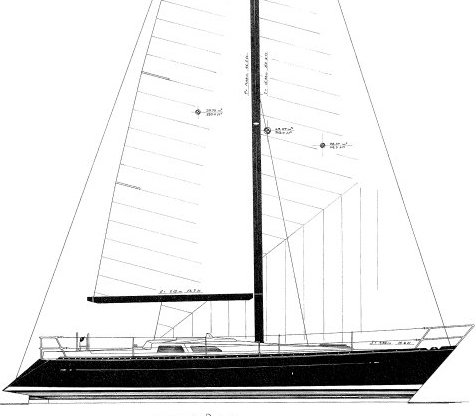
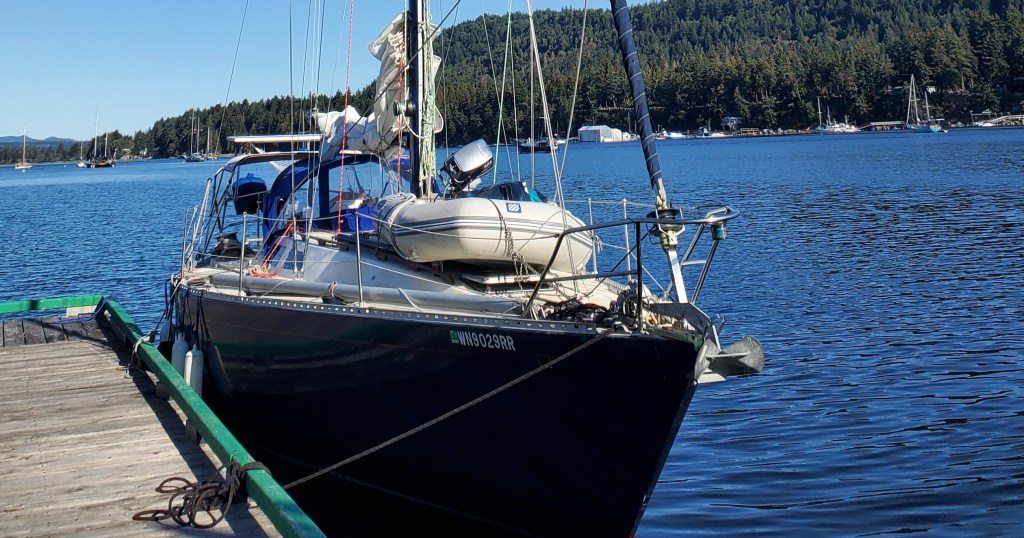
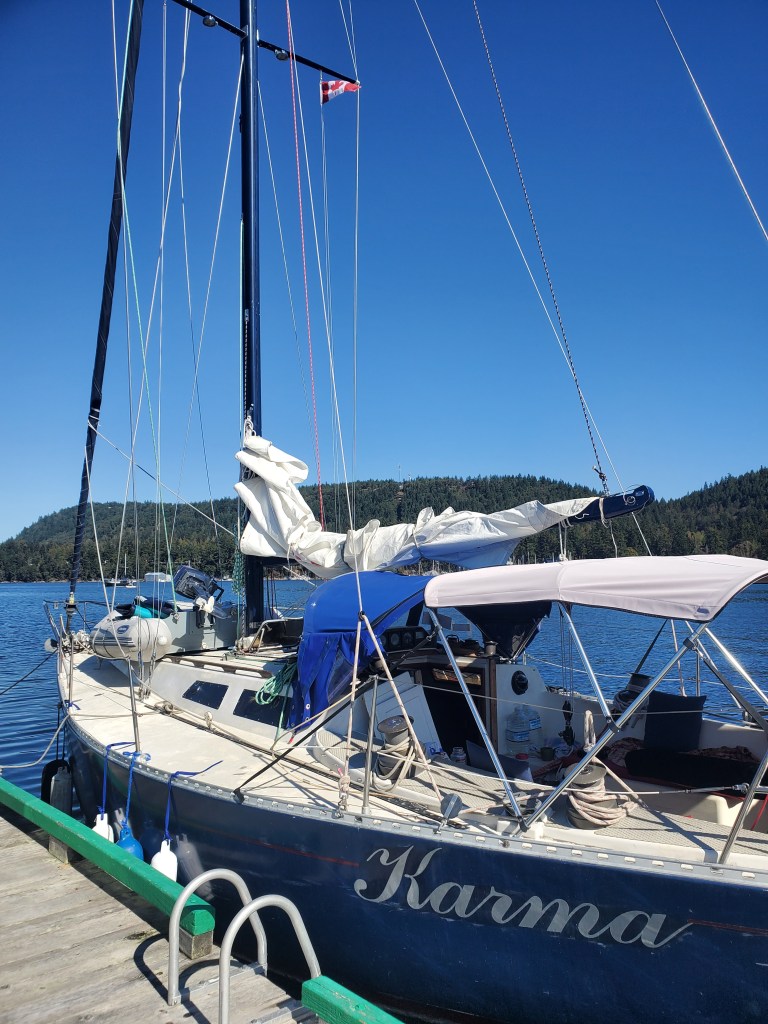
Aboard Karma we have a hodgepodge of things which were found on discount or given to us all mixed together to make a pretty solid albeit primitive ground tackle setup. There will be another post to come about how we ended up with all this and how we installed it, as Karma had no ground tackle essentially upon our purchase. But for now just note we are working with a 35lbs Delta fast-set anchor, roughly 180 feet of mainly 5/8ths G3 chain, 100 feet of old nylon rode, a homemade snubber with nylon and a chainhook, and a manual single speed double action Muir horizontal windlass.
To be safe while anchoring, the general consensus is to let out a 4:1 scope from the waterline of anchor rode. Meaning if the depth is 20 feet, let out 4x the depth, 80 feet. Now if the bottom isn’t the best holding, or it’s going to be windy, let out a 5:1 or even more. More weight on the bottom the better. We, being that we live on board and also draw 7 feet, are often anchored rather conservatively. The windlass being manual lands us counting 20 foot markers painted on the chain and we are usually at a 5:1 scope if possible. The tidal swings here can be up to 12 feet so that also has to be taken into account.
Our first season of cruising now coming to a close has us reflecting on our windlass and general ground tackle setup. We had no scary moments, even in some high winds. For the weight of our boat our anchor is a good size and we have ample chain. There are lots of people out there with significantly less chain or way smaller anchors. We back down pretty hard on the anchor to set it and generally don’t worry at all when leaving the boat for a while.

The manual windlass is a vast improvement over hand hauling it up. We tried this for a bit and it worked, almost without issue! Until one day we came to Friday Harbor, with a depth of 46feet below the keel…. This means 50 feet straight down of weight and we had to let out all of our chain. When it came time to pull in the anchor it was literally almost impossible and took about 30 or more minutes, and this was a calm windless day. If there was any breeze or we were in a hurry this would have been straight up dangerous. The windlass moved right to the top of the priority list at this point.
Now, a manual one was sort of decided on before we even had an anchor. They’re cheaper, although not as much cheaper as you’d think, and they’re also essentially unbreakable. Electric windlasses are notoriously badass but go wrong eventually, the motor that is. A manual one is just a single manual heavy duty gear. Technically it could seize up but you can put so much leverage on the thing you could probably unfreeze it. The other reason we went manual was the wiring. Now that we have more experience it seems less daunting, but at the time, running 4 or 2 gauge wire from our batteries all the way to the bow with a huge circuit breaker and solenoid seemed rather over the top.
It is a bit slow, especially when the depth is over 35 feet or so. Depending on the wind, it can be rather tiring as well, but holy hell it is a world of a difference from doing it manually. We have improvements to make still too. Currently we have no hawse pipe, so we crank with one hand and have to manually shuffle the chain down the anchor locker access hatch. This also makes dropping the anchor a manual process, though this is way easier and not too big of a deal. We also have 3 slightly different sizes of chain in our total of about 180 feet. Most of it is the right size for the gypsy, some slips occasionally, and some doesn’t fit at all; therefore, we still have some manual hauling to do each time.
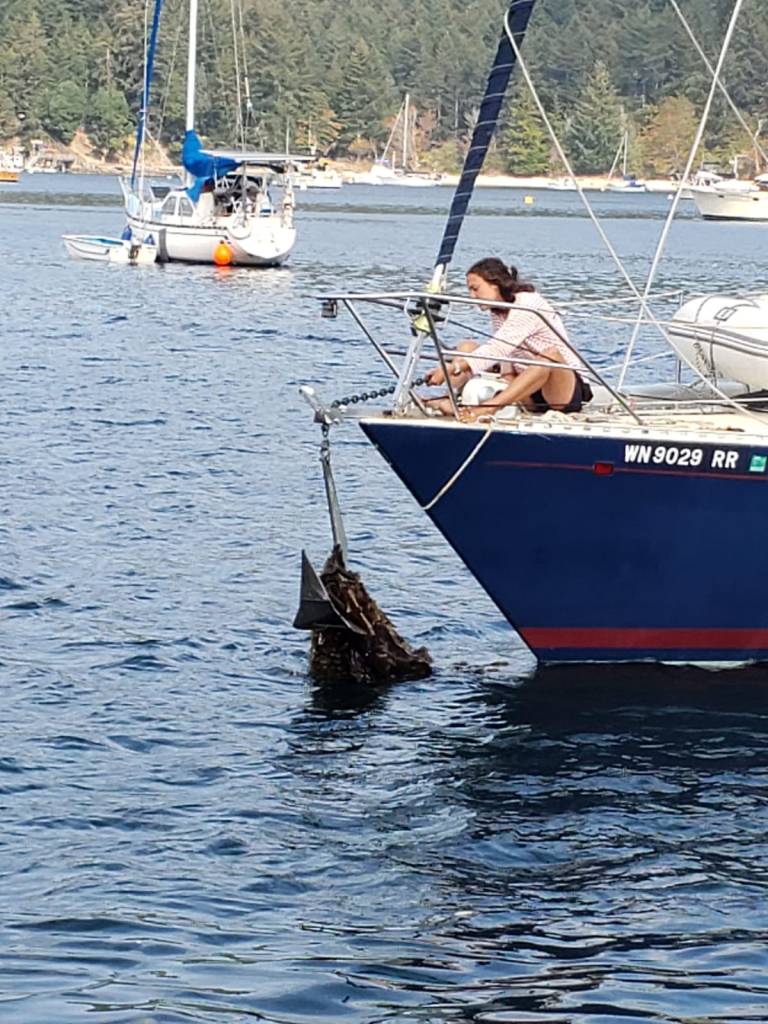
We are looking forward to improving this through the winter by adding a hawse pipe and maybe consolidating chain so it’s all the same size and therefore more of a straightforward process to crank. It does seem to take a while even in fair conditions, though that could just be us as our friend from S/V Swirl helped us re-anchor once and she had the bloody thing up in what seemed like 47 seconds. And if the really right deal comes up on an electric one we may be tempted. But for now this does actually work quite well. Allowing us to be able to pull into any bay with reasonable depth and hang out for a day, week, or month makes some cranking at chain almost a good thing, a little bit of effort to be able to enjoy such a special and particular ability.


 Sailing Vessel Karma
Leave a reply to GT Cancel reply